
In the world of digital marketing, choosing where to spend your first ad dollar can feel like a high-stakes gamble. At DMX Marketing, we often hear the same question from small and medium business owners: “Should I be on Facebook or Google?”
The truth is that both platforms are incredibly powerful, but they operate on completely different psychological principles. Think of it as the difference between a billboard and a yellow pages listing. One finds people who are browsing; the other finds people who are buying.
In 2026, the lines have blurred slightly as both platforms use advanced AI to predict what we want, but the core Why behind each remains the same. Here is a simple breakdown of the differences and how to know which one is the right fit for your current goals.
Google Ads: The Pull Strategy (Capturing Demand)
Google Ads is often referred to as Search Advertising. It is based on Intent. When someone goes to Google and types in emergency plumber near me or “best CRM for small business,” they have a specific problem and are actively looking for a solution.
How it works:
You bid on “keywords” – the specific words or phrases people type into the search bar. When their search matches your keyword, your ad appears at the very top of the results.
The Pros:
- High Intent: You are reaching people at the exact moment they are ready to act.
- Faster Conversions: Because the user is already “in the market,” the journey from click to sale is usually very short.
- Predictability: If 1,000 people search for your service every month, you can reliably predict how much traffic you can “capture.”
The Cons:
- Higher Cost: Because these users are so valuable, competition is high. A single click for a lawyer or a high-end contractor can cost $20, $50, or even $100+.
- Limited Scale: You can only show your ad as often as people search for your keywords. If nobody is searching, your ads won’t run.
Meta Ads: The Push Strategy (Creating Demand)
Meta Ads (which includes Facebook and Instagram) is known as Social Advertising. It is based on Interests and Demographics. People don’t go to Instagram to find a plumber; they go there to see what their friends are doing or to be entertained by Reels.
How it works:
Instead of targeting what people type, you target who people are. You tell Meta to show your ad to “Women, aged 30-45, living in Oakville, who are interested in interior design and organic gardening.”
The Pros:
- Visual Storytelling: Meta is a visual platform. It’s perfect for showing off a beautiful dish, a stunning home renovation, or a “behind-the-scenes” video of your process.
- Brand Awareness: You can reach thousands of people who might not even know they need your product yet. You are creating the craving.
- Lower Initial Cost: Generally, the “Cost Per Click” (CPC) on Meta is significantly lower than on Google. You can start with as little as $5–$10 a day and see meaningful reach.
The Cons:
- Lower Intent: Just because someone likes “Interior Design” doesn’t mean they are ready to hire a designer today. They might just be “window shopping.”
- Creative Fatigue: People get bored of seeing the same ad. You have to refresh your images and videos frequently to keep the algorithm (and your audience) happy.
When is One Better Than the Other?
To help you decide, let’s look at a few real-world examples.
Example 1: The Urgent Service (Google Wins)
Imagine your water heater bursts at 2:00 AM. You aren’t going to scroll through Instagram looking for a funny video of a plumber. You are going to Google and searching “water heater repair Oakville.”
Verdict: If your business solves an urgent problem (locksmiths, tow trucks, repair services), Google Ads is your best friend.
Example 2: The Lifestyle Product (Meta Wins)
You’ve just launched a new line of eco-friendly, stylish yoga mats. Most people aren’t searching for a specific brand of yoga mat, but when they see a beautiful video of someone using your mat in a serene setting while they’re scrolling their feed, they think, “I need that.”
Verdict: If your product is visually appealing or an impulse buy (fashion, beauty, home decor), Meta Ads will deliver the best ROI.
Example 3: The New Innovation (Meta Wins)
If you have invented a product that nobody has ever heard of before – like a “smart plant pot” that talks to you – nobody is searching for it because they don’t know it exists.
Verdict: You need to educate the market first. Meta Ads allow you to introduce your concept to the right audience and build that initial awareness.
The 2026 Secret: The Hybrid Approach
In today’s digital landscape, the most successful brands don’t choose just one – they use both in a Full-Funnel Strategy.
At DMX Marketing, we often suggest a “warm-up and catch” strategy:
- The Warm-Up (Meta): Use Facebook and Instagram to introduce your brand to your ideal audience. Let them see your face, your work, and your values. Even if they don’t click, they now recognize your name.
- The Catch (Google): A week later, when that same person realizes they actually do need your service, they’ll search on Google. When they see your “Sponsored” listing at the top, they’ll recognize you from the “Warm-Up” and be 3x more likely to click on your ad instead of a competitor’s.
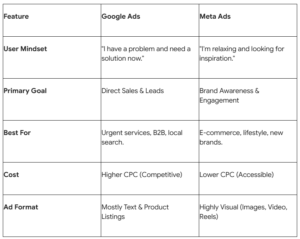
Summary Table: At a Glance
Final Thoughts
Choosing the right platform depends on your business bottleneck. Do you need more people to know you exist? Start with Meta. Do you need to close more sales from people who are already looking for you? Start with Google.