
After discussing the privacy pitfalls of viral trends and the hidden dangers of data mining, you might be wondering: Is anything safe to post anymore?
The answer is yes! You don’t have to go completely “dark” to protect yourself. The key is shifting your strategy from personal disclosure to value-based sharing. By focusing on topics that don’t rely on your sensitive data, you can build a vibrant online presence without handing over the keys to your identity.
Here are five “safe” social media topics that keep your privacy intact while keeping your feed fresh
1. Curated “Later-Grams” (The Delayed Post)
One of the biggest safety risks is posting your live location. It tells the world—and potential bad actors—exactly where you are (and that you aren’t at home).
- The Safe Way: Adopt the “#Latergram” philosophy. Wait until you have left the restaurant, event, or vacation spot before posting.
- Pro Tip: Take a screenshot of your photo before uploading it. This often strips out the EXIF metadata (the hidden GPS coordinates and timestamp) that original files carry.
2. Knowledge and Tutorials
Instead of sharing who you are, share what you know. Educational content is one of the most high-value types of posts, and it requires zero personal information.
- Ideas: Share a quick cooking tip (just showing your hands), a book review, a productivity hack, or a “how-to” related to your hobby or profession.
- Why it’s safe: You are providing value to your followers without revealing your daily routine, address, or family details.
3. Curated Interests (The “Aesthetic” Feed)
Many successful accounts focus on a specific niche rather than the creator’s personal life. This is often called “faceless” content.
- Ideas: Photography of nature/architecture, digital art, interior design inspiration, or even a “mood board” of things you find interesting.
- Why it’s safe: By focusing on the subject rather than yourself, you maintain a layer of anonymity while still expressing your personality.
4. Interactive Polls and General Questions
Engagement doesn’t have to be personal. You can spark great conversations by asking your audience for their opinions on neutral topics.
- The Safe Way: “What’s the best movie you’ve seen this year?” or “Coffee or Tea?”
- The Danger to Avoid: Avoid “icebreaker” questions that mirror security questions, such as “What was your first concert?” or “What’s your pet’s name?” Stick to subjective opinions rather than historical facts about your life.
5. Professional Milestones (With a Filter)
Sharing your wins is part of the fun of social media, but be careful with the details.
- The Safe Way: “So proud to have completed my certification today!”
- The Danger to Avoid: Don’t post a photo of the actual certificate if it shows your full legal name, ID number, or the specific address of your workplace. Crop or blur those details out before sharing.
Summary Checklist for a Safe Post
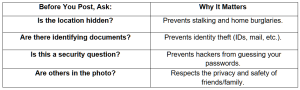
The Bottom Line: Social media is a tool for connection, not a deposition. By being intentional about what you share and when you share it, you can enjoy the digital world without compromising your real-world security.